CNN and Kalshi: why prediction market odds are on the news (and CNBC, the WSJ, Yahoo and Google too)
CNN, CNBC, the Wall Street Journal, Yahoo Finance and Google Finance all show Kalshi or Polymarket odds now. What each deal includes, who pays whom, the criticism, and how to read a probability you see on TV.
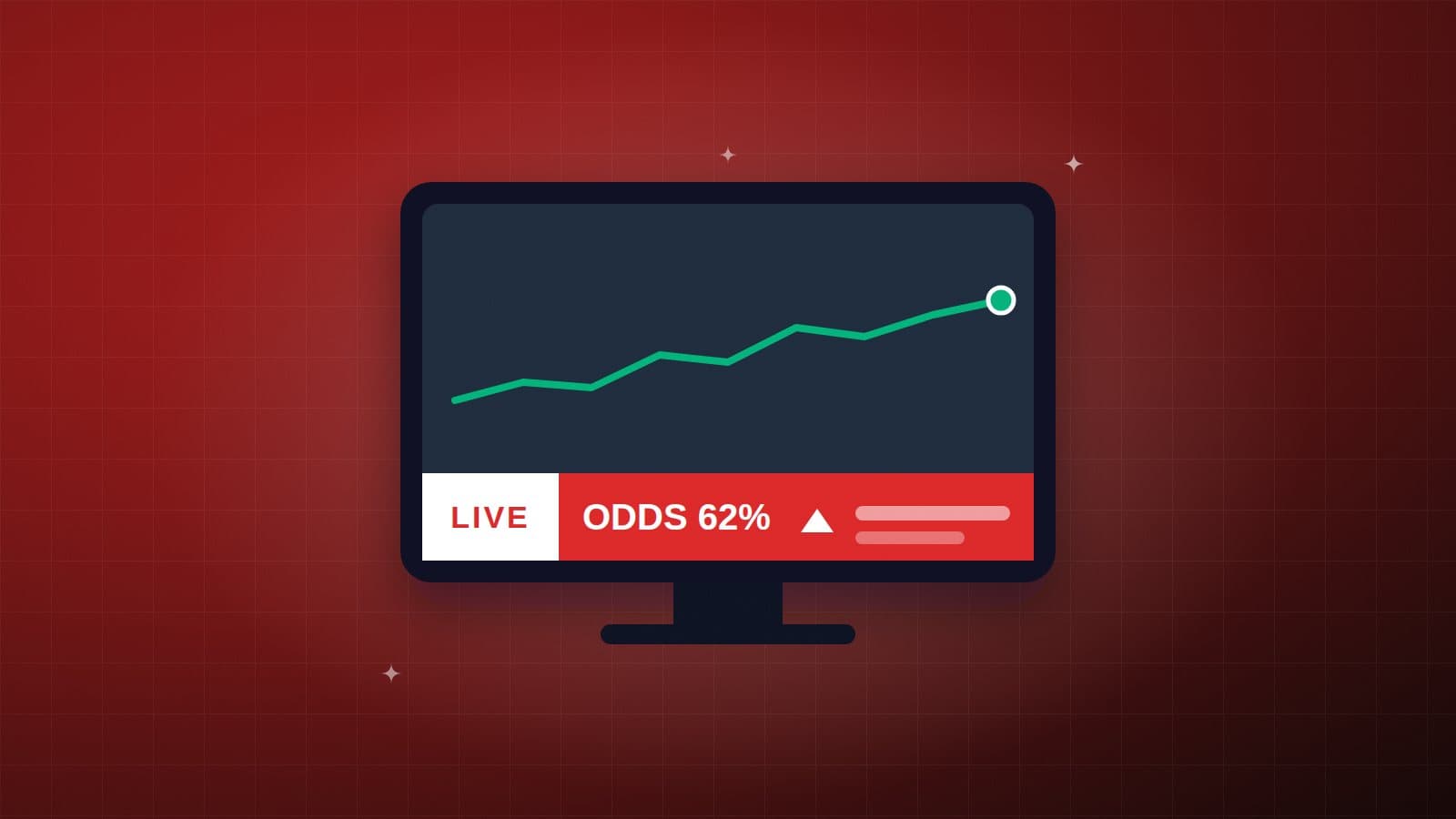
Since December 2025 CNN has used Kalshi as its official prediction market partner. Kalshi's odds feed CNN's on-air graphics and a scrolling ticker, and CNN's data team, led by chief data analyst Harry Enten, uses them alongside polls. Two days later CNBC signed its own exclusive deal with Kalshi, and Polymarket has partners of its own, from the Wall Street Journal's owner to X.
If you have seen "Kalshi odds" on the screen during election coverage, this is why.
As of October 2026.
What the CNN–Kalshi deal includes
Announced on 2 December 2025, the partnership covers:
- Kalshi data across CNN programming, led by Harry Enten, who uses market odds as another data point next to polls when he discusses how likely a political or cultural event is.
- A Kalshi-powered real-time ticker that runs during segments featuring Kalshi data.
- Access for CNN's newsroom, data and production teams to Kalshi's political, news and cultural data for stories and visuals.
The data comes from Kalshi's API, so the numbers on screen are the live market prices.
Who pays whom?
Axios, which broke the story, reported that CNN does not pay Kalshi for the data and that the deal is exclusive. TheWrap later reported, citing a source, that Kalshi pays CNN and CNBC as part of their agreements. The terms have not been published.
The other media deals
| Outlet | Partner | Announced | What viewers and readers see |
|---|---|---|---|
| CNN | Kalshi | December 2025 | Odds in segments and a ticker; used by the data team |
| CNBC | Kalshi | December 2025 | From 2026, odds on shows such as Squawk Box and Fast Money, an on-air ticker, and a CNBC page on Kalshi's site |
| Dow Jones (Wall Street Journal) | Polymarket | January 2026 | Polymarket data modules across the WSJ, Barron's, MarketWatch and Investor's Business Daily |
| Yahoo Finance | Polymarket | Late 2025 | Polymarket odds integrated into the site |
| X (formerly Twitter) | Polymarket | 2025 | Polymarket as X's official prediction market partner |
| Google Finance | Kalshi and Polymarket | November 2025 | Market probabilities shown in answers to questions such as GDP growth |
CNBC's deal is multi-year and exclusive. In announcing it, CNBC president KC Sullivan said prediction markets were "rapidly shaping how investors and business leaders think about important events."
Why news organisations want prediction market odds
- A single number that updates in real time. Polls come out every few days; a market moves the moment news breaks.
- Money behind the forecast. Traders lose money when they are wrong, which pushes prices toward the most informed view, at least in liquid markets (are prediction markets accurate?).
- Broader questions. Markets cover things polls do not: Fed decisions, shutdown deadlines, award winners, weather.
- Engagement and revenue. Data partnerships give the platforms exposure and give networks a new kind of on-screen content.
The criticism
The deals have drawn sharp objections. Slate argued in December 2025 that CNN was treating betting prices as if they were election data. Others objected to a news network promoting a platform where users can trade on wars and humanitarian crises, and to the risk that a thin market, moved by a few large traders, ends up on national television as "the odds". In October 2026 The Intercept described prediction markets as having "a lock on the midterms" coverage.
The fair middle view: market odds are useful alongside polls and models, not instead of them, and only when the market is deep enough that its price means something.
How to read the odds you see on TV
- The price is a probability. A contract at 62¢ means the market puts the chance at about 62% (prediction market odds explained).
- Check how much is traded. A market with millions of dollars of volume is far more informative than one with a few thousand. A thin market can be moved by one trader.
- Compare platforms. Kalshi and Polymarket often list the same race at slightly different prices; a big gap is a sign of thin trading or different rules (live comparison).
- Read the rules. "Wins the election" and "is certified the winner" can settle differently.
- Remember favourites lose. A 70% favourite loses three times in ten.
Our live race-by-race view of Kalshi and Polymarket prices for the midterms: 2026 election odds.
CNN and Kalshi: frequently asked questions
Does CNN own Kalshi?
No. CNN and Kalshi have a data partnership; Kalshi is an independent company.
Why does CNN show Kalshi odds?
Under a December 2025 partnership, CNN uses Kalshi's market data in its coverage, including a ticker during segments that feature it.
Does Kalshi pay CNN?
The terms are not public. Axios reported that CNN does not pay Kalshi; TheWrap reported that Kalshi pays CNN and CNBC.
Which network uses Polymarket?
Polymarket's media partners include Dow Jones (owner of the Wall Street Journal, Barron's and MarketWatch), Yahoo Finance and X; Google Finance shows both Polymarket and Kalshi.
Are the odds on CNN accurate?
They are live market prices. They are most reliable on heavily traded questions and should be read alongside polls.