Kalshi and Polymarket perps: perpetual futures explained (leverage, funding, liquidation)
In 2026 both big prediction markets added perpetual futures: Kalshi in the US from June, Polymarket outside the US from September. What a perp is, how leverage, funding and liquidation work, with worked examples, and how it differs from a $1 event contract.
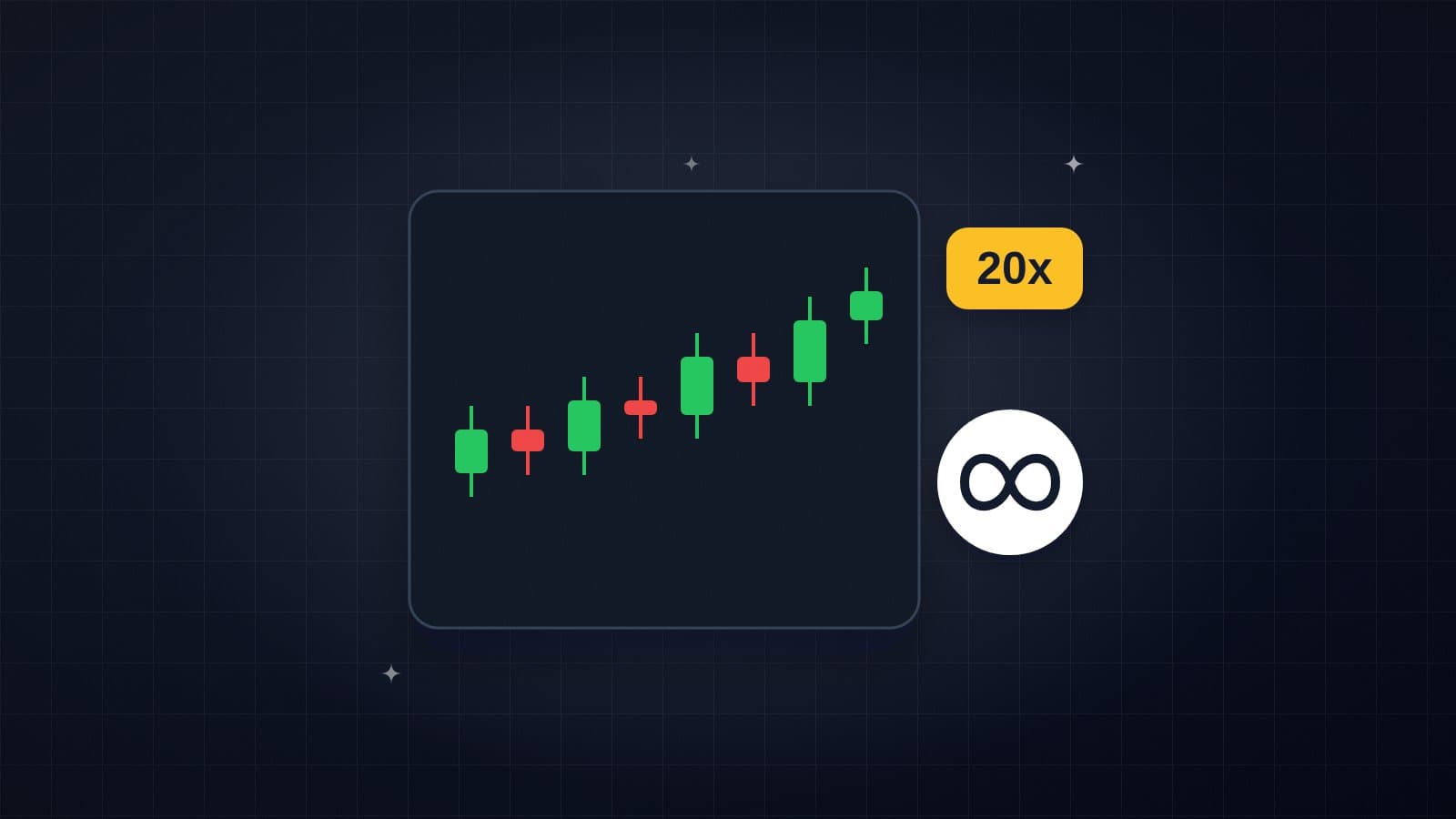
A perpetual future, or "perp", is a leveraged bet on an asset's price that never expires. In 2026 both of the big prediction markets added them. Kalshi launched the first CFTC-regulated perpetual futures in the US, starting with Bitcoin in June. Polymarket launched Polymarket Perps on its global site in September, with up to 20x leverage, for users outside the US.
Perps are a different product from the yes/no contracts these platforms are known for, and much riskier. This guide explains how they work.
As of 21 October 2026.
Perps vs event contracts
| Event contract | Perpetual future | |
|---|---|---|
| What you trade | Will X happen? | The price of an asset (Bitcoin, gold, a stock index) |
| Payout | $1 if yes, $0 if no | Your profit or loss follows the price, multiplied by leverage |
| Most you can lose | What you paid | Your whole margin, quickly |
| Expiry | When the event is decided | None |
| Extra costs | Trading fee | Trading fee plus funding payments |
Kalshi perpetual futures
| Date | What launched |
|---|---|
| 29 May 2026 | The CFTC approves Kalshi's Bitcoin perpetual, the first regulated perp for US traders |
| 3 June 2026 | BTCPERP goes live |
| 10 September 2026 | Gold and silver perps |
| October 2026 | US500, a perp on the US stock market index, with funding exchanged daily at 4 pm New York time |
| November 2026 (announced) | Webull to offer Kalshi's crypto perps to its customers, cleared through Kalshi Klear LLC, Kalshi's clearinghouse |
Kalshi's perps sit in a separate section of the app with their own help pages. You choose your leverage when you open a position; exposure is synthetic, so a US500 perp gives you no shares, dividends or votes.
Polymarket Perps
Polymarket launched Polymarket Perps on 3 September 2026:
- Available outside the US only. US users are directed to Polymarket US, the CFTC-regulated app, instead (Polymarket in the US).
- Up to 20x leverage on crypto, the S&P 500, oil, gold and silver, and up to 10x on other assets.
- At launch: 24 crypto contracts, 36 equity-linked markets, three indices and four commodities.
- Margin in pUSD, Polymarket's dollar token, the same collateral used for predictions.
How leverage works
Leverage lets a small amount of margin control a bigger position.
Worked example. You post $1,000 of margin at 5x, so you control a $5,000 Bitcoin position.
| Bitcoin moves | Position change | On your $1,000 |
|---|---|---|
| +4% | +$200 | +20% |
| −4% | −$200 | −20% |
| −20% | −$1,000 | Margin gone |
At 20x, a 5% move against you wipes out the margin. In practice you are liquidated before that, because exchanges close positions once your margin falls below a maintenance level.
How funding works
A perp has no expiry date to pull its price back to the real asset, so exchanges use funding: regular payments between longs and shorts.
- If the perp trades above the asset's price, longs pay shorts.
- If it trades below, shorts pay longs.
Example. On a $5,000 long, a funding rate of 0.01% per day costs 50¢ a day, about $15 a month. Small per day, but it adds up on positions held for weeks, and rates jump when everyone is on the same side.
Who perps are for, and who they are not for
Perps suit experienced traders who want to hedge or trade short-term price moves and who use stop-losses and small leverage. They are a poor fit for anyone looking for the capped-risk, "most I can lose is what I paid" feature of event contracts. If you want a view on Bitcoin with capped risk, a price-range event contract does that (Polymarket crypto markets).
Perps: frequently asked questions
Does Kalshi have perpetual futures?
Yes. Kalshi launched Bitcoin perps in June 2026 and added gold, silver and a US stock index perp later in the year, under CFTC regulation.
Can Americans trade Polymarket perps?
No. Polymarket Perps launched for users outside the US; Americans use Polymarket US.
What leverage does Polymarket offer on perps?
Up to 20x on crypto, the S&P 500, oil, gold and silver, and up to 10x on other assets, at launch.
What is a funding rate?
A periodic payment between longs and shorts that keeps a perp's price close to the underlying asset.
Can you lose more than you put in?
Exchanges liquidate positions before margin runs out, so losses are normally limited to your margin, but with high leverage that can happen in minutes.