Fed decision odds: markets expect a hold on 28 October, and a hike in December
Kalshi and Polymarket put about an 88% chance on the Fed holding rates at its 27–28 October meeting, after September’s first hike since 2023. A December hike is priced at about 75%. The odds, the inflation data behind them and what to watch.
NDNews desk22 Oct 2026 · 2 min read
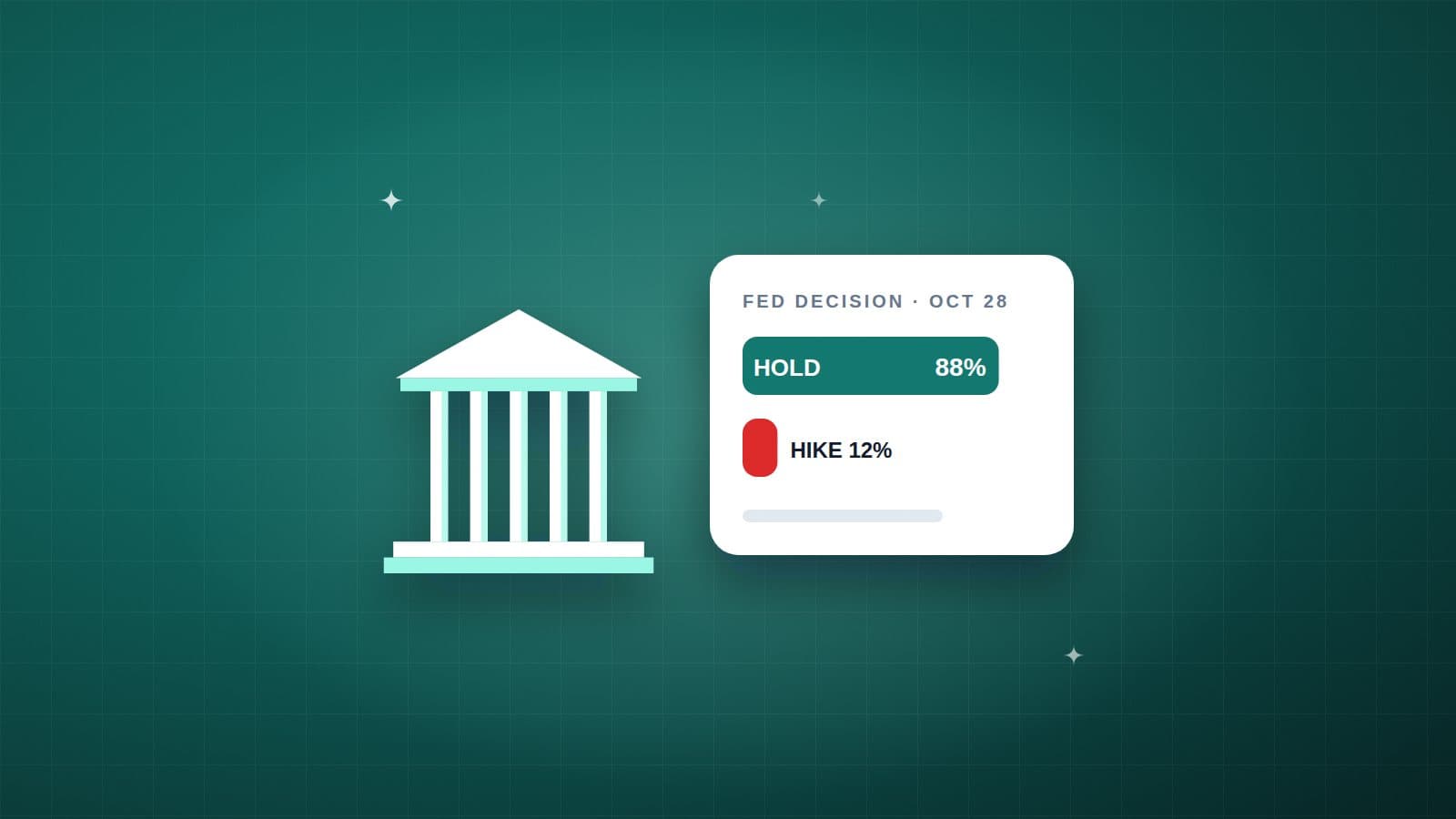
Traders expect the Federal Reserve to leave rates unchanged at its 27–28 October meeting. Polymarket gives "no change" about 87.5% and Kalshi 89%, with a 25-basis-point hike at about 11–12%. The bigger bet is on December, where Kalshi prices a hike at about 75%.
Prices as of 22 October 2026.
The odds
| October decision | Polymarket | Kalshi |
|---|---|---|
| No change | 87.5% | 89% |
| Hike 25 bps | 11.5% | 11% |
| Bigger hike or any cut | Under 1% | About 1% each |
Polymarket's October market has traded about $54.6 million. Live prices: October Fed decision on Polymarket · on Kalshi.
How we got here
- 16 September: the Fed raised its target range by 25 basis points to 3.75–4.00%, its first increase since 2023. The vote was 12–0, and 16 of 18 officials projected one more hike this year. Chair Kevin Warsh said the Fed must be confident that underlying inflation is moving to its target "clearly and at sufficient speed", and cited tension in the Middle East.
- September inflation came in at 3.7%, above the 3.6% forecast, which briefly pushed October hike odds above 40%. They have faded since, as most economists expect the Fed to wait until December.
- The futures market broadly agrees: CME FedWatch put an October hike at about 13–16% and a December hike near 90% in reports this week.
What to watch
- The statement and dissents. Polymarket even has a market on how many officials dissent; zero and two dissents were tied at about 24.5% each. In July three officials dissented in favour of a hike.
- Oil and the Iran conflict, which feed straight into inflation expectations (Polymarket Iran markets).
- December. If the statement points clearly to another hike, the December market should firm up from about 75%.
How these markets connect to the broader economy: recession odds.
Keep reading
#news#economy#fed#odds
ND
Written by
News desk
Markets research