Kalshi launches a US500 stock-index perpetual; the CFTC extends its review of a 10-year Treasury yield perp
Kalshi’s US500 perpetual, tracking the 500 largest US-listed companies, went live on 6 October after CFTC approval. A second contract on 10-year Treasury yields is under an extended review until 29 November. What each contract is and why Kalshi is moving into financial perps.
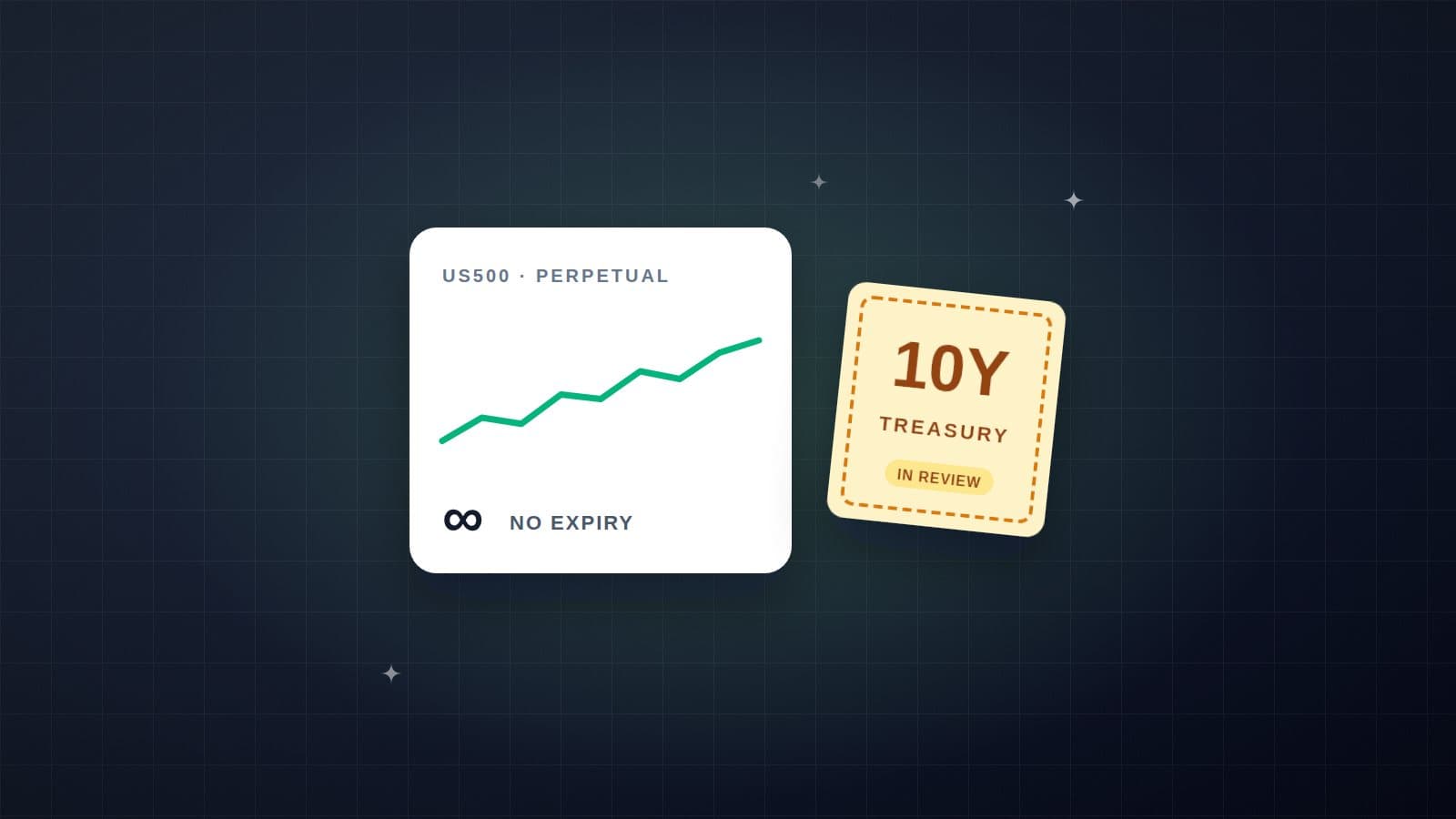
Kalshi has taken perpetual futures into US stocks and is waiting on a contract tied to Treasury yields. Its US500 perpetual, which tracks the MerQube U.S. Large Cap Index of the 500 largest US-listed companies, received CFTC approval on 3 October 2026 and launched on 6 October. A separate filing for a perpetual on 10-year US Treasury yields is under an extended CFTC review that runs to 29 November.
The two contracts
| US500 perpetual | 10-year Treasury yield perpetual | |
|---|---|---|
| Tracks | MerQube U.S. Large Cap Index (500 largest US-listed companies) | The 10-year US Treasury yield |
| Filed | 18 August 2026 | 31 August 2026, with a request for confidential treatment |
| Status | Approved 3 October; live since 6 October | CFTC took an extra 45 days; review runs to 29 November |
| Settlement | Cash-settled, cleared by Kalshi Klear | Not yet approved |
Like Kalshi's other perpetuals, the US500 has no expiry date. Long and short holders exchange funding payments that keep the contract's price close to the index. Despite some headlines, it does not track the S&P 500 itself, which is a licensed index from a different provider.
Why Kalshi is doing this
Event contracts on sports and elections made Kalshi big, but they are also what states are fighting in court (Utah's lawsuit, Underdog vs Tennessee). Financial perpetuals sit squarely under the CFTC, carry no gambling question, and compete with the leveraged products US traders now use offshore. Kalshi launched a bitcoin perpetual in June and gold and silver perpetuals in September; this month it added financing for crypto collateral and a Webull distribution deal (Kalshi's bitcoin-backed loans).
A Treasury-yield perpetual would give traders a way to bet on interest-rate moves, such as a surprise from the Fed (Fed decision odds), without buying bond futures.